A restaurant website design that converts in 2026 does three things in under three seconds: loads fully on a phone over 4G, shows a clear order or book button above the fold, and lets a hungry visitor place an order without downloading anything. Everything else on the page is secondary.
| Feature | Why It Matters | Priority |
|---|---|---|
| Mobile-first layout | Most diners search and order from a phone, often on the walk to your door | Must-have |
| Direct online ordering | Avoids per-order commission fees charged by third-party delivery apps | Must-have |
| Live booking integration | Shows real table availability and sends automated reminders | Must-have |
| POS/kitchen display sync | Orders hit the kitchen without staff re-entering them by hand | High |
| Fast image-heavy menu | Food photos drive orders, but only if the page still loads fast | High |
| Local SEO schema markup | Helps Google surface hours, menu, and location in local search results | Medium |
| Payment gateway integration | Secure, familiar checkout reduces cart abandonment | Must-have |
Walk into most restaurant websites still live today and you'll find the same pattern: a homepage built for desktop years ago, a PDF menu that requires pinch-zooming, and a phone number as the only way to book a table. None of that survives contact with a hungry customer on their phone.
The cost shows up quietly. A visitor who can't find the "Order Now" button in five seconds doesn't call to complain, they just leave for a competitor's site or a delivery app. That's a lost booking or order with zero feedback telling you why.
Slow-loading pages compound the problem. Restaurant sites are photo-heavy by nature, and an unoptimized image gallery can push load times past 5-6 seconds on mobile data. Every extra second past the first two costs measurable drop-off, and there's no polite way to recover a visitor who already closed the tab.
"Mobile-friendly" usually means a desktop site squeezed into a smaller screen. "Mobile-first" means the layout starts on a phone screen and scales up, so buttons, menu photos, and the order flow are built around a thumb, not a mouse.
That distinction shows up in specifics. Order and reservation buttons should sit within thumb reach near the bottom of the screen, not buried in a top navigation menu that requires scrolling back up. Menu categories should collapse into tappable accordions instead of long scrolling walls of text.
Page speed also feeds directly into local search visibility. Google's Core Web Vitals, which measure loading speed, interactivity, and visual stability, factor into how a restaurant ranks for "restaurants near me" style searches. A slow site doesn't just lose the visitor in front of it, it loses future visitors who never see it in search results at all.
Third-party delivery marketplaces built their business on convenience, and they charge for it. Commission rates on those platforms commonly run from 15% to 30% per order, a cut that comes straight out of already thin restaurant margins.
A direct ordering system on your own website keeps that margin in-house. The build needs a secure payment gateway, a menu that syncs quantities and modifiers correctly, and ideally a connection into your existing point-of-sale or kitchen display system so orders don't need to be retyped by hand.
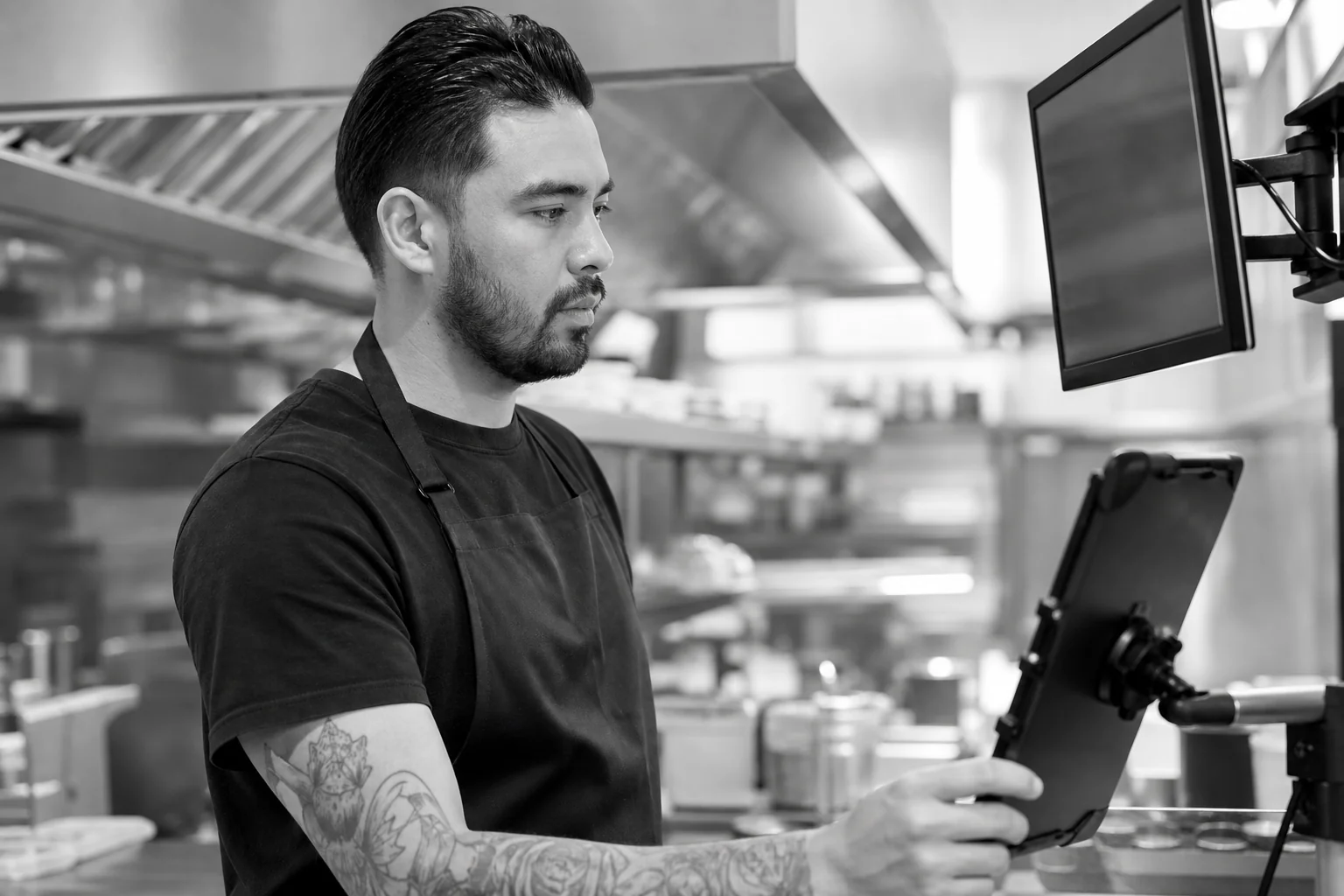
This is where custom web development earns its cost over a template builder. Connecting a payment processor, a POS, and a delivery logistics API into one working flow is an integration job, not a drag-and-drop task. Learn about our web development process for the technical detail behind this kind of build.
Don't treat delivery marketplaces as the enemy entirely. Many restaurants keep a presence on them for discovery while pushing repeat customers toward direct ordering with loyalty perks or slightly better pricing. The two channels can coexist; the mistake is having no direct channel at all.
A restaurant checkout should avoid forced account creation, hidden fees that appear only at the final step, and more than three screens between menu selection and payment confirmation. Each extra step or surprise cost is a documented point where customers abandon the order.
A booking form that just emails the restaurant and waits for someone to call back isn't a booking system, it's a contact form wearing a disguise. Real booking integration shows live table availability and confirms the reservation instantly.
The bigger win is what happens after the booking. Automated confirmation messages, followed by a reminder the day of the reservation, catch the no-shows that a static form never could. Restaurants lose real revenue to empty tables that were reserved and forgotten.
You have two paths here: a widget from an established reservation platform embedded into your site, or a custom-built booking flow tied into your own database. The widget route is faster and cheaper to launch. The custom route gives full control over branding, data ownership, and how the booking connects to your CRM or loyalty program, but it costs more to build and maintain.
A beautiful restaurant site that doesn't convert is a portfolio piece, not a business asset. Every design decision should point toward one of two actions: placing an order or booking a table.
Food photography carries real weight in that decision, but it has to load fast and appear near the top of the page, not three scrolls down. Pair it with a visible, high-contrast call-to-action button that says exactly what happens next, like "Order for Pickup" instead of a vague "Learn More."
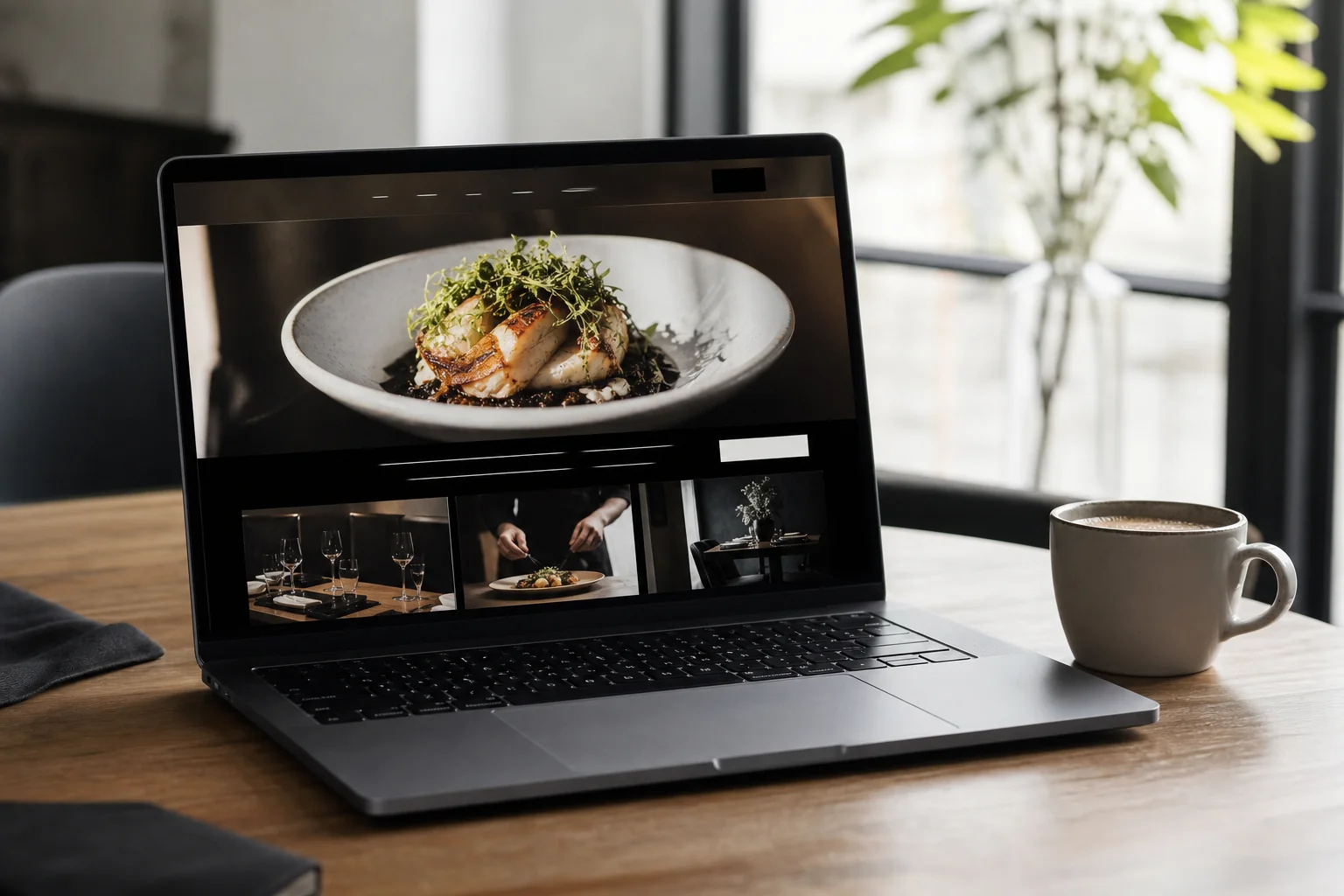
Trust signals matter more than most restaurant owners assume. Current hours, a link to recent reviews, and clear allergen or dietary information reduce the hesitation that stops someone from committing to an order. Skipping these details doesn't make the site cleaner, it makes it less trustworthy.
Local SEO fundamentals belong in this same conversion conversation. Structured data markup that tells search engines your hours, menu, and location, synced with your Google Business Profile, is what gets a restaurant surfaced in local search and map results in the first place. Good UX design and good technical SEO are the same job here, not two separate ones. Read more on how UX and functionality work together for a deeper look at that overlap.
Restaurant UX is judged on speed to a single decision, ordering or booking, within one visit, unlike retail sites built for browsing across many sessions. That means fewer distractions, shorter paths, and far less tolerance for friction than a typical e-commerce store.
A vague brief produces a vague quote and a build that misses your real needs. Before you contact any development partner, put these details in writing.
Our own guide to evaluating a development partner covers the questions worth asking on the vendor side too, and pairs well with this brief when you're comparing quotes.
| Option | Ordering Control | Ongoing Cost | Best For |
|---|---|---|---|
| Custom code (React/Next.js) | Full control, direct POS/payment integration | Higher upfront, lower per-order cost long-term | Multi-location or high-volume restaurants |
| Website builder (Squarespace, Wix) | Limited, often via third-party plugin | Low monthly fee, plugin fees add up | Single-location restaurants with simple menus |
| Marketplace app only (no own site) | None, platform owns the customer relationship | 15-30% commission per order | Restaurants with no digital presence yet |
A custom build makes the most sense once order volume or multi-location complexity outgrows what a builder plugin can handle cleanly. See our breakdown on website redesign cost by feature scope if you're weighing a rebuild against a smaller refresh.
Cost depends heavily on whether you need direct ordering, POS integration, and custom design work, or a simpler informational site. Contact a development partner with your specific feature list for an accurate quote rather than relying on a generic industry average.
No. A well-built mobile-first website can handle ordering directly in the browser, avoiding the cost and friction of getting customers to download a dedicated app just for one restaurant.
Timelines vary with scope, but a site with direct ordering and booking integration typically takes longer than a simple informational site because of the payment and POS integration work involved. Discuss your specific feature list to get a realistic timeline.
In most cases, yes. Most modern point-of-sale systems offer APIs that a development team can connect into your new site, so orders sync automatically instead of requiring manual re-entry by staff.
A restaurant website that actually converts isn't a bigger menu of features, it's the right handful of them built well: fast mobile pages, direct ordering that protects your margin, booking that follows up automatically, and a design that gets a hungry visitor to one decision fast. If your current site is still asking customers to pinch-zoom a PDF menu or call in to book a table, that's the gap costing you covers every week.
Axire Infotech's development and design teams build exactly this kind of restaurant site, from UI/UX design focused on conversion through to app development if you later want a companion loyalty app. Browse our project work or explore the full range of services to see how the pieces fit together. When you're ready to brief a partner on your rebuild, get in touch and we'll walk through your menu, systems, and timeline together.
Let's discuss your project and create something amazing together.
